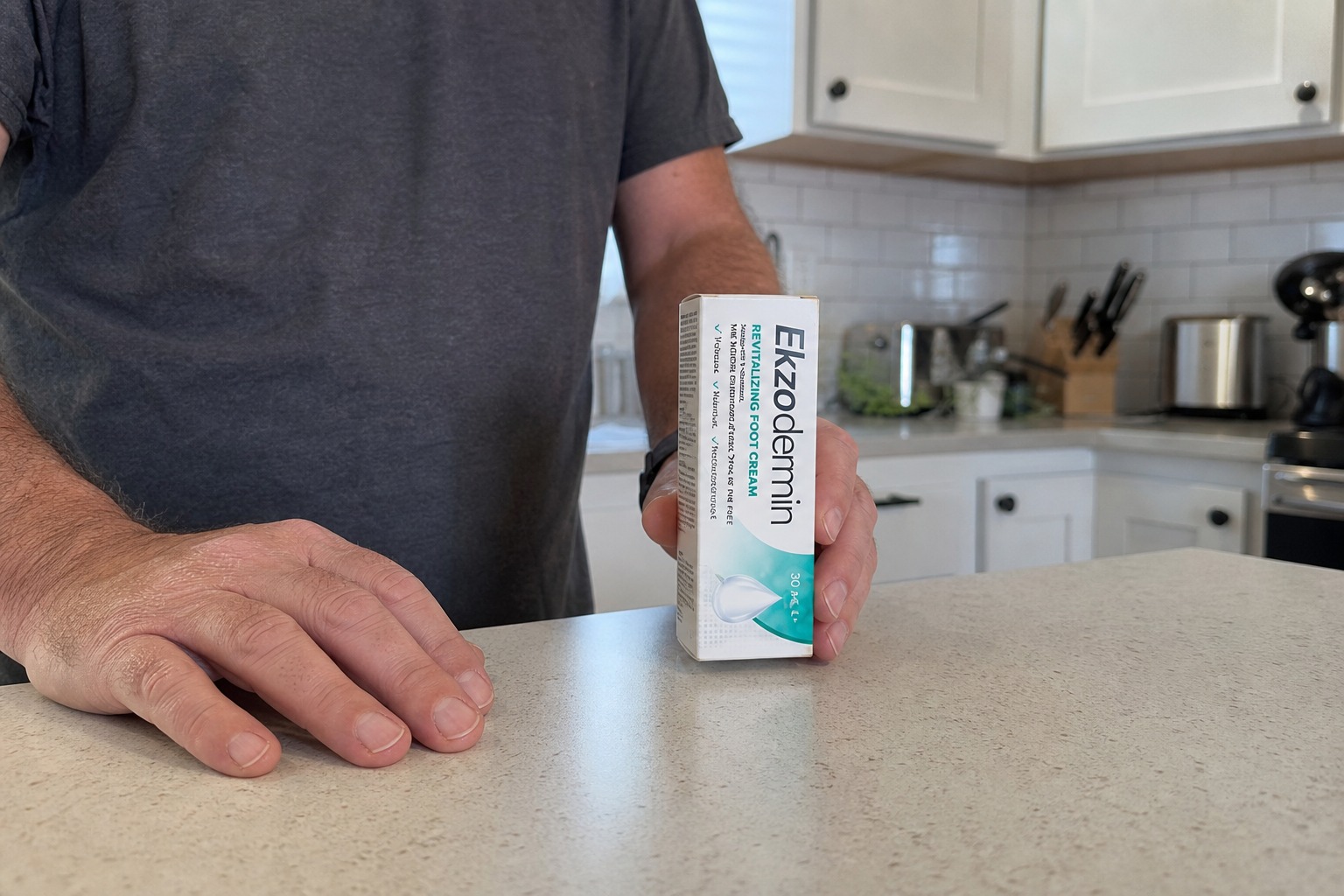
Ekzodermin is a topical cream that I tried for irritation, peeling, and itching between my toes. The problem arose after the gym and wearing closed shoes, and I mainly wanted to stop the itching without weighing down my skin.
The tube was small and practical. The cream had a white texture, spread easily, and required only a small amount, which I appreciated right away because I didn’t want something heavy or cumbersome in my daily routine.
How I applied it
I applied it morning and night for six weeks. In the morning, I waited a few minutes before putting on socks, while in the evening I used it after my shower, usually sitting on the edge of the bed with a towel underneath. At first, I applied more than I needed, and then a thin slippery layer remained, making it difficult to put on socks. I quickly learned that a small pea-sized amount at each spot was enough, as long as the skin was very dry, especially between the toes.
The packaging mentioned tea tree oil, urea, panthenol, allantoin, magnesium sulfate, triacetin, and trichlorosilane. I didn’t focus on what each ingredient does. I was more interested in being able to apply it consistently without it irritating me.
What I observed in practice
In the first week, I didn’t see a dramatic change. The itching was slightly milder in the evening, but the peeling persisted, and the skin between my fourth and fifth toes still looked distressed. This made me keep my expectations low.
In the second week, I felt less discomfort when I took off my shoes. This was the first clear sign that something was changing. By the third week, the redness had decreased significantly, and the skin didn’t break open as easily. I also had a small crack on my heel that softened, although I can’t say for sure that the cream was solely responsible, as I also started applying moisturizer to my soles more frequently.
The unpleasant odor after many hours in athletic shoes decreased, but it didn’t completely disappear. I liked this because, in daily use, it was one of the most bothersome things I dealt with.
However, the results on my nails were not the same. I had a nail on my pinky that was dull and slightly yellowed, and after six weeks, I didn’t see any significant change there. This disappointed me a bit because I hoped that consistent application would help improve that appearance. For nail issues, the cream alone didn’t seem sufficient to me.
What I didn’t like
- It had a strong tea tree smell for the first few minutes after application.
- During the first three applications, I felt a mild sting on areas where the skin was cracked.
- If I applied a large amount, it remained sticky until absorbed.
- It didn’t make a noticeable difference in the appearance of my problematic nail.
The sting didn’t last more than a minute, and I didn’t have any rash or swelling. Nevertheless, if someone has very sensitive skin or knows they are bothered by fragrant essential oils, I would be cautious. I first did a small test on the side of my sole for one night and had no reaction.
I would consider it an option for mild itching, peeling, or irritation on the skin of the feet, as long as there is consistency and the area stays dry. I don’t see it as a solution for advanced fungal infections, open wounds, or persistently damaged nails. If the problem is painful, spreading, or shows no improvement, I would go to a dermatologist instead of constantly switching creams.
With my use, Ekzodermin provided me with gradual relief for the irritated skin on my feet. It didn’t work wonders for my nails. If I needed it again for periods of itching and peeling, I would buy it again, but only with that understanding. It helped calm my skin, not solve every foot problem.